

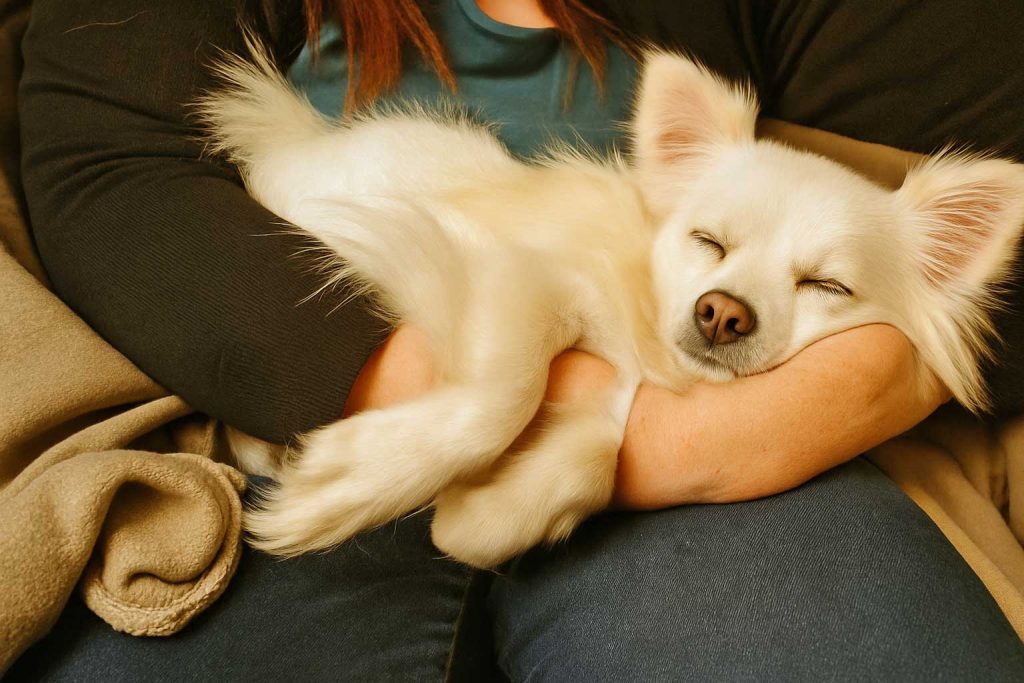
Every year, as Bonfire Night rolls around, our house goes into “calm mode.” 🎆
Fireworks might be fun for people, but for many animals they’re frightening – the loud bangs, flashes and unpredictable noises can send even the most confident pet running for cover. With seven cats and one small dog in our house, keeping everyone calm takes planning, patience and a bit of creativity.
Here’s what works for us and might help your pets, too. 💛🐾
Create a safe, cosy space
Each of our cats has a preferred hiding spot, so I make sure those spaces are ready before dark soft blankets, favourite toys and somewhere quiet where they won’t be disturbed. For Casper (our Pomchi), we build a little den in the lounge blankets, his bed, and one of my jumpers for scent comfort.
The RSPCA recommends giving pets control over where they go, some will hide, others will want to stay close to you. Let them choose.
Drown out the noise
Background noise makes a huge difference. I close all the windows and blinds and put the TV or music on a little louder than usual. Soft, steady sounds help mask the unpredictable bangs.
Casper seems to find classical music or low, rhythmic sounds calming, I often play a playlist called “Calm Pets” on Spotify (they even have one made in partnership with Battersea). The cats prefer the hum of the TV and gentle chatter.
Stick to your routine
Animals feel safer when things stay familiar. So even if fireworks start early, I keep feeding times, walks and cuddles roughly the same. Casper still gets his evening walk before dusk never once the fireworks start and we settle down together for the night.
A quick note for dog owners: the RSPCA and Dogs Trust both recommend walking dogs before dark and keeping them safely indoors once fireworks begin. Always make sure microchips and ID tags are up to date, just in case they panic and bolt.
Use treats and distractions
Treats go a long way on nights like these. Casper gets a long-lasting chew or lick mat while the cats get something extra tasty – Thrive treats are always a winner here. It keeps them busy and helps associate the noise with something positive.
For very anxious pets, pheromone diffusers such as Feliway (for cats) or Adaptil (for dogs) can help too. I plug them in a few days before Bonfire Night to take the edge off.
Stay calm yourself
Probably the hardest but most important part. Pets pick up on our emotions, so I try to keep my voice soft and movements slow. If Casper jumps at a bang, I don’t fuss too much, just speak gently, give him space or a cuddle if he asks for one, and act like it’s nothing unusual.
The cats usually retreat to their safe spots, and by now they know I’ll check in quietly and leave them be until they reappear.
Stay home if you can
I know how tempting it is to go and watch the fireworks, but honestly, I’d rather stay home. It’s quieter, calmer, and I know they’re not scared and alone. The reward of seeing them relaxed and settled is far better than any display.
Final thoughts
Bonfire Night can be stressful, but with a bit of planning and reassurance, it doesn’t have to be a nightmare for your pets. Whether it’s soothing music, cuddles on the sofa, or a quiet hiding spot, the goal is the same, helping them feel safe.
If your pet’s fear feels extreme, it’s worth chatting with your vet. They can advise on calming aids or medication to make nights like this easier.
So tonight, the curtains will be closed, the TV turned up, and Casper will be curled up by my side while the cats snooze upstairs. That’s our version of Bonfire Night – safe, warm, and full of love.
References (UK)
- RSPCA: Fireworks and Pets
- Dogs Trust: Fireworks Advice for Dogs
- Battersea: Fireworks and Pets
- Blue Cross: Fireworks and Your Pets